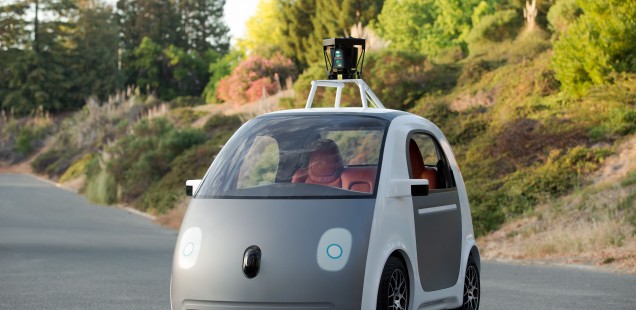
A Future Where Cars Drive Themselves
I read two different blog posts about the company Google and their self-driving car project, If a Self-Driving Car Gets in an Accident, Who-or What-Is Liable? by Alexis C. Madrigal and a post from Google’s official blog called Just press go: designing a self driving vehicle. The idea of self-driving cars is very controversial for many reasons and each of the blog posts that I read addressed these issues in different ways, while using some similar writing techniques.
The blog post by Alexis C. Madrigal was focused on who or what would take the blame in the case of an accident involving a Google self-driving car. The main question she was asking was whether an accident would be Google’s fault or the car itself’s fault. The argument for blaming Google is that since they designed the cars, it is their fault if they cause an accident. The opposing side is that these cars should legally be considered people and that they should be held responsible in the case of an accident. The official Google blog post was much more about what these self-driving cars are and how Google plans for them to work.
Both of these posts used multiple links so that the reader could find more information if they wanted to. They also included pictures and, in the case of the official Google blog, a video. The main difference between these blog posts was in the tone. Madrigal’s post asked a lot of questions, which made me think that she was not trying to make a point so much as trying to get her audience to think about various aspects of the issue. Google’s post, on the other hand, was much more straight forward and technical. It was basically telling the reader about how Google was going to make their plan for self-driving cars work. I feel as if reading from these two different perspectives gave me a more well rounded understanding of the issue and of people’s concerns about the idea of self-driving cars.
Featured Image Source: http://recode.net/2014/05/27/googles-new-self-driving-car-ditches-the-steering-wheel/
 Views All Time
 Views Today
I agree with everything you said! I think something else that Google did that was good was add the video. Watching it not only gave me a visual, but also made me think it was really cool and interesting. Seeing the car in motion and hearing all the people say how in love with it they were after just one ride makes me want to buy one right now. This plays on interaction because readers can share this video by tweeting or posting something, allowing the idea to be spread even further.
I also agree with you in terms of style. The Google blog is very to the point, only giving the basics, while the other blog raises questions about responsibility and reliability. Reading this blog first would definitely not make me as excited about the car as reading the Google website first, which is a good thing. Madrigal’s blog has a more argumentative style, forcing the reader to think about the technicalities of new technology such as Google’s new car.
I like how you chose two blog posts with the same topic. This shows that there can be varying viewpoints, despite the fact that one of them is written by the company that develops these “self-driving” cars. We can see how one post (Google) can be very factual and straightforward, while the other can be very biased and controversial.
Self driving cars can cause a lot of problems in the future, Alexis C. Madrigal has a reason to blog about. It’s interesting to see opposing viewpoints on the subject so the audience can formulate a more dynamic opinion.