Ota Benga – The Pygmy in the Zoo
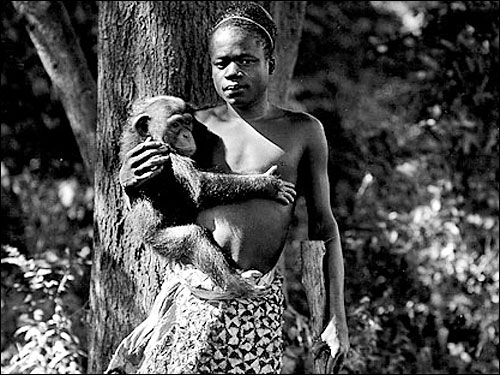
The story that I listened to revolves around an African man from the early 1900’s, who was brought to America and lived in a zoo. This man, Ota Benga, was brought to the United States as a part of an exposition for the St. Louis’ World Fair. Upon his return to Africa, he discovered that his tribe had been wiped out by genocide. As a result, he returned to the United States, where he eventually became a part of the zoo’s “Monkey House” exhibit. Benga was later released from the zoo, with the help of various African-American spokespeople. He briefly lived in an orphanage, where he attempted to adapt to American society.
The story begins with an exposition by Carrie Allen McCray, a woman who had lived with Benga, and Phillips Verner Bradford, the grandson of the man who brought Benga to the United States. These two provide details that establish the background of the story.
This audio story is very effective in establishing a scene. The editor of this piece has included the text of several pertinent letters and newspaper articles. Specifically, he uses the memo that calls for the acquisition of the Pygmy men and an article that explains that these men are being brought to the United States. The news article used lists some “facts” about Pygmies. While these sources are not confirmed in the piece, they contain a vocabulary that sounds consistent to the early 1900’s. The editor has also chosen to include contemporary music to help further establish the scene. The news story fades, and McCray beings to offer more details regarding Ota Benga.
The next section of the story begins with Bradford’s dialogue. Bradford mentions Benga’s attempted return to Africa and how he began working in the zoo as a maintenance worker. He explains that the zoo’s director realized that people had begun to come to the zoo to see Benga “because he was scantily dressed and performed with the animals.” As Bradford is explaining this, music begins to play, and another news article is read aloud.
As the story progresses, more details are offered by McCray and Bradford. They both sound as if they are speaking informally, telling the story as they know it. While the story they are presenting is interesting, it is the narrator and editor’s ability to set the scene that keeps people interested. The use of contemporary music and texts helps to establish a large amount of credibility.
I am unsure as to who the “ideal listener” of this story could be. Instead, I believe that this story functions as a lesson on racism in the United States. This story, while entertaining, is meant to educate its listeners.
 Views All Time
 Views Today