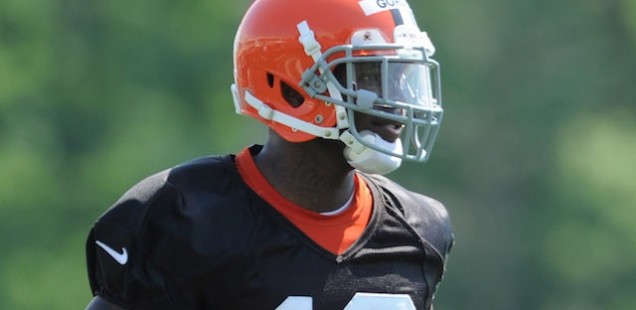
Josh Gordon and NFL Policy

After three months of discussing the fate of Cleveland Browns wide receiver, Josh Gordon, the NFL finally decided to uphold the season long suspension that Gordon was facing.
Gordon, last season’s leading receiver, was in stage three of the NFL’s substance-abuse program. As a result, another failed drug test would have meant a minimum one year suspension. While this policy has been implemented numerous times in the past, Gordon’s failed test was unlike any other.
According to Mike Florio of ProFootballTalk, Gordon’s test had several discrepancies. As per the negotiations of the NFL Player’s Association, Gordon’s urine sample was split into two separate bottles. The bottles were labeled “A” and “B.” One bottle was randomly selected and the THC concentration was tested. The threshold for a sample to test positive is 15 ng/mL, significantly lower than the 50 ng/mL threshold used by NBA and US Military.
Upon testing Gordon’s samples, the “A” sample contained 16 ng/mL. The “B” sample had 13.6 ng/mL. Because the “A” sample was tested first and the results were above the threshold, the “B” sample only needed to verify that THC was present. If the “B” sample had been tested first, it would have counted as a passed test.
While the NFL claims that each case is handled without regard to other cases, many people have noted the significant difference in the length of Gordon’s suspension versus Ray Rice’s two game suspension for domestic abuse.
How sad that Josh Gordon would be in better shape with the NFL if he had knocked out a woman instead.
— Bart Hubbuch (@HubbuchNYP) August 27, 2014
Roger Goodell, the commissioner of the NFL, has since stated that Rice did not receive the punishment that he deserved and has implemented a new policy regarding domestic violence.
Although Goodell appears to have fixed his stance on domestic abuse, there does not appear to be any talks of changing the policies regarding recreational drugs, which have no impact on the game. A polling of current NFL players showed that most players feel that marijuana is not any more dangerous than alcohol, which players are not tested for.
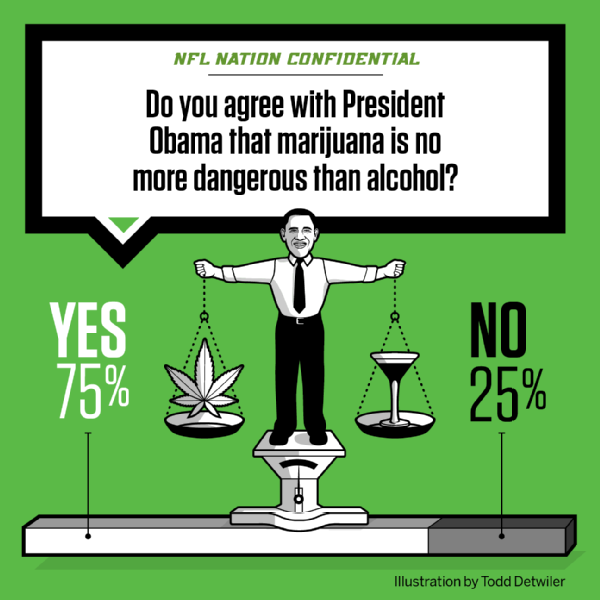
If this poll holds any weight, it could very well show that the NFL is headed towards a new policy regarding recreational drugs. This change in policy by the NFL could very well reflect the policy changes that are being implemented throughout the country.
 Views All Time
 Views Today