
Rhetorical Velocity in Action on Twitter
Rhetorical velocity is used to anticipate what will happen to a publication after it has been broadcasted. Whether it is a newspaper article, television story, facebook status or in this instance, a tweet, anything that is spread throughout any form of media is subject to be redistributed in another form or place.
For social media accounts advocating increased awareness of social issues, rhetorical velocity is crucial. Gaining attention and encouraging readers or viewers to spread the information shared aids in sharing the issue and knowledge with a larger audience. For organizations aiming to increase knowledge and awareness about dyslexia, rhetorical velocity is a good concept to utilize. An example of an attempt at using this concept can be seen below.
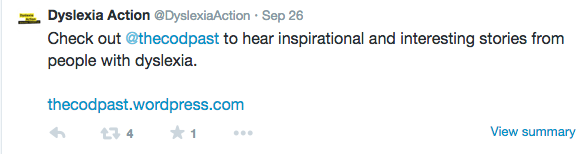
This tweet was published by Dyslexia Action (@DyslexiaAction), a national organization whose goal is to aid and improve the lives of people affected by dyslexia and other learning disabilities. This tweet is short, simple, and to the point. It gives the reader a link where they can connect to more information, and uses compelling vocabulary such as “inspirational” and “interesting” to convince their audience to investigate further, which is what any organization ultimately wants from their viewers.
Another example of a tweet can be seen below.
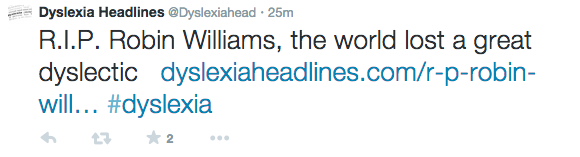
This tweet created by Dyslexia Headlines (@dyslexiahead) contains text about dyslexia (the issue that Dyslexia Headlines focuses on). It is interactive, with a link that provides the reader with more information, expanding upon the initial 140-characters. The tweet relates to recent news events which are bound to gain attention and readers.This is the overall goal – to gain readers who may then re-publish the content somewhere else (for instance, this could be re-tweeted). That being said, this example loses some credibility due to the spelling error in the tweet, which detracts from the ethos appeal that the user is attempting to promote.
A particularly useful way to promote rhetorical velocity on Twitter is through the use of hashtags. By using a hashtag in a tweet, Twitter users can search for that tag and be connected to any user who has tagged that word or phrase, as seen below.
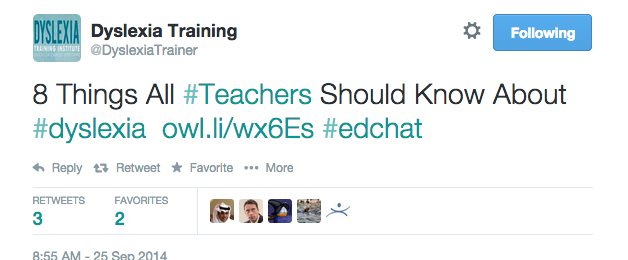
Dyslexia Training (@Dyslexiatrainer) tags the words ‘teacher’ and ‘dyslexia’ to promote this tweet. By doing so, any user who searches through twitter for these phrases will be given the chance to view this tweet and be connected to the Dyslexia Training twitter.
In an attempt to practice the rhetorical velocity techniques witnessed by the three examples above, I composed the following five tweets:
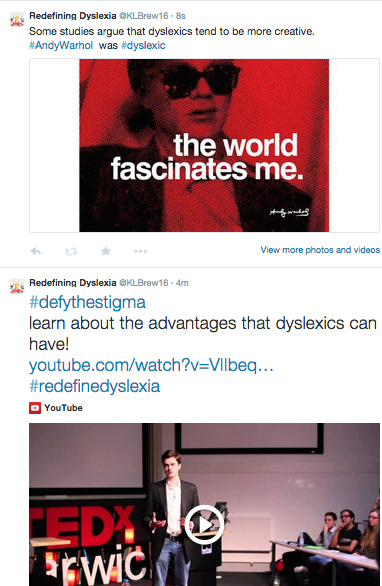
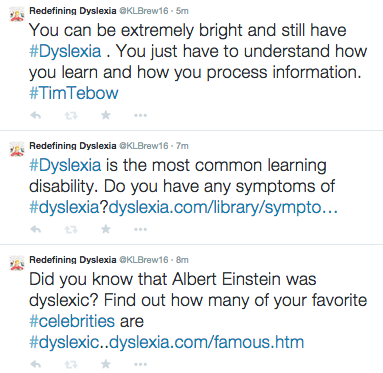
The ultimate goal of most twitter accounts, particularly for ones advocating a cause, is to gain an audiences. Various techniques were used in the creation of these five tweets to serve that purpose. First, there are links to media (pictures, video, or sites with further information) in some of them. This encourages the audience to seek further information about the issue as a result of viewing this tweet. Asking questions of the audience or presenting facts may gain the reader’s interest and attention. Hashtags allow for more people to access these tweets, as stated previously. Some hashtags, such as #redefinedyslexia and #defythestigma are specific and will likely link only to this account, giving them a recognizable and memorable edge. The hashtag #dyslexia or something similar was utilized in all of the tweets, but more broad hashtags relating to the specific tweets rather than the general subject are also used. Creating hashtags for #celebrities and #timtebow as shown may gain a larger audience.
Rhetorical velocity is something that publishers strive for, particularly when information is broadcasted online. While it is no guarantee how many people a facebook status or a tweet will reach, using techniques like the ones described may bring a larger audience to the information in question.
 Views All Time
 Views Today
I really like your tweets that mention that Andy Warhol and Tim Tebow are dyslexic. The hashtag makes them accessible to people who are searching for more information about dyslexia and those that may have it themselves. I think that those two tweets in particular will make those who have dyslexia feel less alone and less worried about the stigma associated with it, as they’ll now know that two famous and highly accomplished people have dyslexia. Also, putting their names in hashtag format will widen your audience further, as you mentioned.
My work with my own Twitter research has led me to discover, like you have found, the impact multimedia has on rhetorical velocity. I am really drawn to the picture of Andy Warhol as I think it makes users stop and take notice. In that regard, they are able to learn more about the background of your Tweet. It’s a great picture to retweet and share. I think given the vast social media space occupied, in order to get an edge of rhetorical velocity it is important to find a unique angle. I definitely think you did that in the Any Warhol tweet.
As I haven’t been an avid Twitter user prior to this class, I’m really starting to understand the importance and impact of hashtags. I like how use common ones such as #celebrities to really increase your rhetorical velocity!